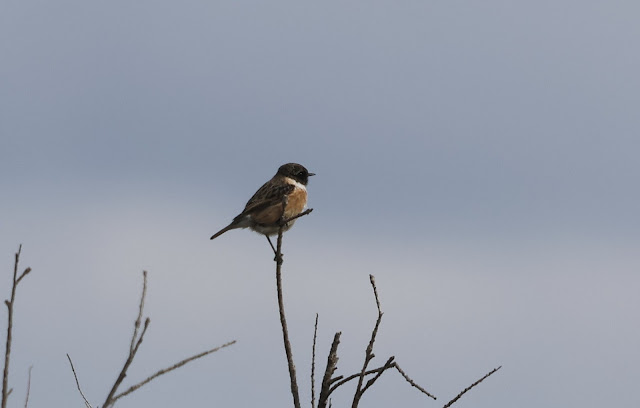
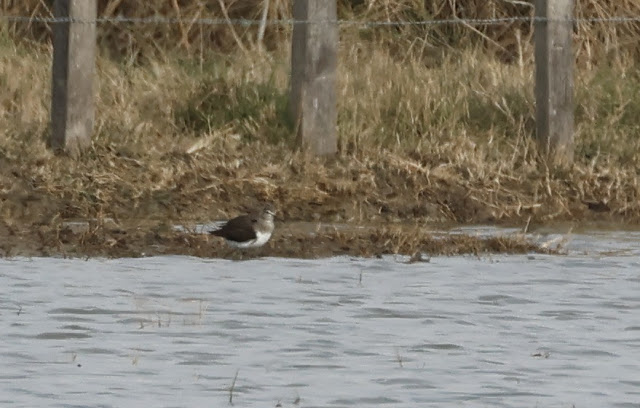
Everything after visiting the Camargue was the cheery on top a nice work trip to France. Oh but what a nice cherry! The next day after some much needed sleep, I had the first half of the day free as my colleagues started to filter into the hotel for an evening dinner. The weather actually turned out to be mostly free of rain which was not in the forecast. Actually it was raining in Cannes, but I saw that the Cap D'Antibes was kind of sticking out into the Mediterranean and seemed to be keeping out of the rain shadow. So I jumped in an Uber and was there 15 minutes later.

When I did some research on some of the birds I could lifer from in Cannes, the Yelkouan Shearwater was high on the list. This little Audubon's/Sargasso lookalike can be seen working the waters close to land. The Sentier du Littoral is a great trail around the Cap D'Antibes starting at Billionaire's Bay on one side and finishing in the town of Antibes on the other. Its nickname is "Tire-poil" which means hair-pull on account of the consistent winds here. However, it was nice and calm for the most part while I was there.

Billionaire's Bay was gorgeous. The cool thing here is that most of the mega-mansions are set back a little from the coast which leaves the trail going around the peninsula relatively wild and rugged.

First bird I saw here was a lifer, a small flock of Crag Martins were circling and I tried to photograph them but realized I had the wrong autofocus setting on. By the time I switched from spot focus, they had gone! Don't worry dear readers, I got some later in the trip.

European Shag

European Robin

Great Cormorant

Yellow-legged Gull is the most common gull here other than Black-headed.


Mastic - I remembered to submit my daily iNat entries while here and also made up for some missed ones over the past couple days. This is an important plant in the Mediterranean providing food in the form of seeds and berries for local fauna. The sap of the Mastic tree or shrub has been collected as far back as Roman times for use as chewing gum! Who knew that chewing gum was so old. I guess back in the old days, breath fresheners were even more important than they are now with the lack of good oral hygiene back then.

Mediterranean Buckthorn - similarly another important local plant with seeds and berries for local fauna. It was introduced in Australia and has become invasive there.

Tree Medick - Another Mediterranean native. Either I was really lucky in picking natives or they are very careful to keep only natives on this trail because I was not finding any invasive or exotics.

As I worked around the trail, the wind picked up and I started scanning the sea for Shearwaters. I know they like wind because the wind creates an upwelling of nutrients which brings bait to the surface.

Yellow-legged Gull


Yelkouan Shearwaters!!

They were pretty far off shore but I took a zillion photos and some turned out okay.


I sifted through the hundreds of Black-headed Gulls to look for a Mediterranean Gull but was not successful. It would have been tough at that distance anyhow.

Sandwich Tern

This guy sailed right through the flock and probably got eye-popping looks at the shearwaters and I bet he didn't even know how lucky he was.

Hooded Crow!

I took a bunch of photos of first and second cycle gulls hoping to check through them later for something interesting but they all turned out to just be more Yellow-legged Gulls.

Or Black-headed Gulls.

Common Kingfisher - usually these are hard to photograph but this one had nowhere to hide.


Stone Pine - a native pine tree in this area of the Mediterranean. This particular day was basically a work day. I did head out on the Croisette which is basically the boardwalk in Cannes to look for Mediterranean Gulls but dipped again.

Melissa arrived that evening and she was wrecked from her red-eye flight so she got some room service and went to bed early. The hotel comped us a bottle of wine because of some trouble with noise the first night, but we didn't have an opportunity to drink it. While she slept, I had a Gala dinner with my work colleagues and then tried to play the social game as long as I could before turning in for the night.
The next day I had a half day of work then Melissa and I took an Uber to a local park in the hills above Cannes.

It was a gorgeous day and we had plenty of birds but most of them remained hidden. Birds in this area are very wary and rarely perch out in the open. I later spoke with my uncle about this and he said that there is a long history of hunting of songbirds in this part of the world and the fauna has adapted. I also noted that pishing doesn't work at all. This makes getting photos very difficult.

These hills were absolutely covered with yellow blooms. It turns out January through February is a great time to visit because this is when the mimosa trees are in bloom. Actually they are not mimosas at all but many of the locals call them that based on an erroneous classification issue many years ago. These are actually Acacia trees from Australia.

Long-leaf Wattle - this plant is an invasive and in fact almost all of the trees and shrubs in this park seemed to be invasive.

Silver Wattle - these Acacias also are an invasive from Australia and they actually look more like mimosas but again are not.

Melissa loves Eucalyptus trees mainly because she loves southern California but also because of the uniquely patterned bark. These of course are also invasive from Australia.

Common Chiffchaff hanging out in a Silver Wattle.

Long-tailed Tit

Melissa dwarfed by the "mimosa" trees.

Firecrest!

Rose-ringed Parakeet
Friday we had a whole day to ourselves. We got a bit of a late start after a delicious breakfast and walked down to the port to catch a ferry to Ile Sainte-Marguerite. This is the largest of the Lerins Islands and is home to Fort Royal where the Man in the Iron Mask was imprisoned. I will need to watch that movie again because I forget the premise.

Cannes from the water.

Common Chaffinch

Holm Oak - these towering oaks have leaves like hollies when young. These are native to the Mediterranean.

Laurustinus Viburnum - this one is a native.

I thought I had one of the Eurasian falcons when I saw this but turns out they have Peregrines here and the other falcons are migrants that hadn't started coming through yet.

Yellow-legged Gull sitting on the Fort Royal ramparts.

I was really excited when I saw this thrush-like bird thinking maybe I had a Blue Rock Thrush, but it turned out to be a female Black Redstart...

I saw multiple Eurasian Blackcaps on the island but they all stayed hidden.

It was a beautiful day and I definitely recommend the trip if you are in Cannes.

Sunset from the Croisette on our way to dinner.

It was awesome to see my Aunt and my mom's best friend for dinner.

For Saturday, we planned a long hike from the village of Theoule-sur-Mer to some mountainside peaks that offer a great view of the coast. We grabbed an Uber but in hindsight we totally could have taken the train.

The hike up was gorgeous. Pictures don't do it justice. You can see the snow covered Alps in the distance.

We didn't plan the matching hats, it just happened.

Lots of Cork Oaks up here.

The scenery looked more like the American Southwest than France.

Crag Martin!!

Goldcrest!

Crested Tit!! This was the last bird of the trip and a lifer!

On the way down...
That night we celebrated with my uncle, cousin and niece at a nice restaurant off the Croisette. It was so nice to reconnect with my European family. Unfortunately I neglected to take a photo.
That wraps up my European work/vacation trip. Tune in for some NC birds soon.