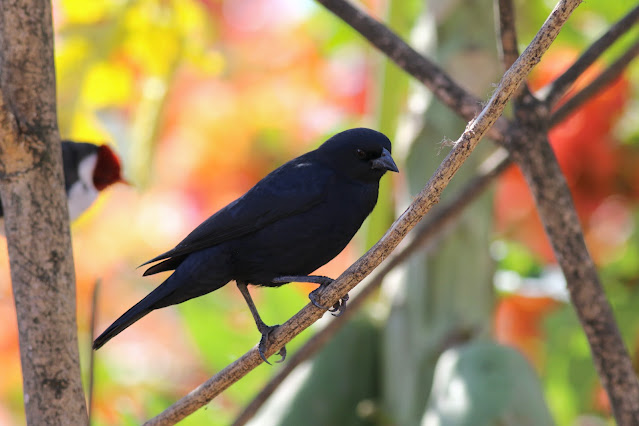
I don't think I have ever split one day into three posts but that is how ridiculously awesome the first full day in Brazil was and it wasn't even really a full day as we travelled in the morning. After siesta we headed out on the Beast (see last post for pic) for a drive across the property. These drives consisted of driving 100 yards on a dirt road, stopping when the birds were good and then opening a cattle gate for covering the next 100 yards and repeating this many times. The driver was very good at sensing when someone in the group wanted a photo of something and we stopped frequently, turning off the Beast to minimize shake from the engine.

This Buff-necked Ibis was just one of many. These birds also came in at night to roost in the trees outside our cabina.

Roadside Hawk - by the end of the trip the joke was that if we saw a hawk we were not instantly able to identify, it was a Roadside Hawk. Roadside Hawks can come in several different plumages including a Pantanal version which has a dark head not seen further north. In fact there are 12 different sub-species that have been identified.

Red-legged Seriema - plenty of these strutting around.

The dominant cow species across the Pantanal is Zebu in origin which means it is a cow variety that comes from the Indian sub-continent and usually is characterized by a fatty hump on their shoulders, a large dewlap (floppy neck thing) and sometimes drooping ears. Brahman is one of the varieties that fall into the Zebu grouping. They are heat tolerant so you will see them in tropical and sub-tropical environments. Some folks say they are not as tasty or maybe too tasty, meaning they have a stronger taste. The Pousadas we stayed at frequently served local beef and I thought it was quite good. At home I am virtually a pescatarian by default because my wife and kids are. However, when traveling I like to partake in some beef and pork. I feel completely fine eating beef and pork especially when I can see how they are living. In this case the cows looked totally content and to a certain extent were free to roam large tracts of land with plenty of food and shade trees. In fact, one of the cool things (pardon the pun) about farms in Brazil is they frequently leave large trees in the fields probably so the animals can seek shade on a hot day, but it has the added bonus of providing bird habitat. That being said I don't agree that large tracts of forested land should be cleared for cattle, so I still think its best to eat it in moderation and as part of a well balanced diet. I think of it as a treat, and I had lots of treats in Brazil.

Bare-faced Ibis

Pantanal Caiman - these reptilians were plentiful and some were quite large.

Pied Lapwing - also known as Pied Plover.

This species is one that covers all of northeast South America including the Amazon Basin but I hadn't seen one before.

Lesser Yellow-headed Vulture - the colors on this beauty are amazing.

Wattled Jacana - one day I will do this amazing bird justice. I just can't seem to get the whole bird in focus. The feet are simply amazing.

Pampas Deer - Considering the many fences around the property I was surprised to see these but apparently they are good jumpers.

Gray-cowled Wood-Rail - easy ID on these considering they only regularly see one species in the area.

Some of the Caiman were pretty large but apparently they almost never go for birds or mammals.

Capybaras were quite common but I had to wait for later in the trip to get up close and personal.

Red-billed Scythebill - and the only one we saw the whole trip.

Vermilion Flycatchers were common and the females frequently caused some ID problems but this male was unambiguous.

Green Ibis - catching the evening light and showing off that green mane.

Wattled Jacana showing the lime green primary feathers.

Look at those feet!
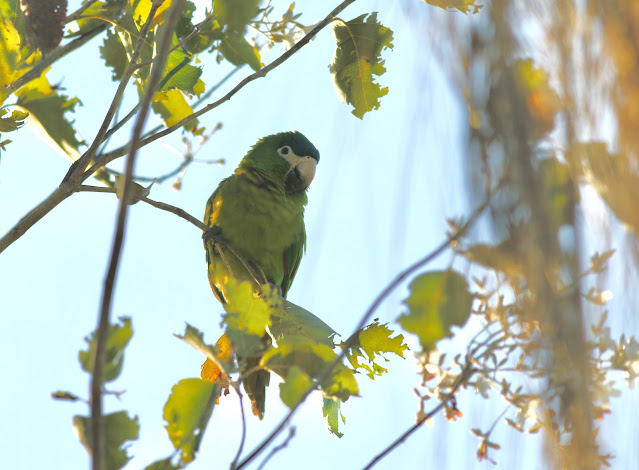
Red-shouldered Macaw! Only time we saw them.
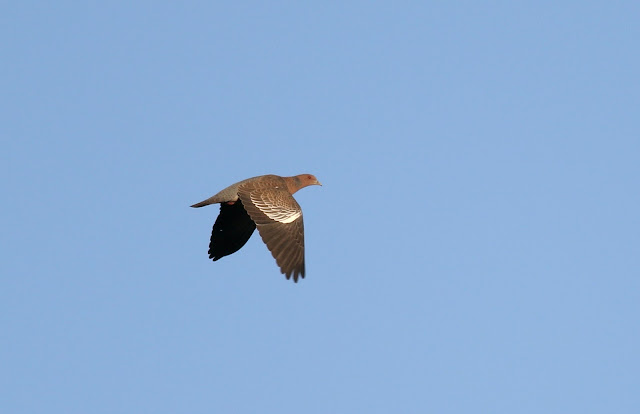
Picazuro Pigeon - these are beasts. Wiki says they can weigh over a pound which is well over a Rock Dove.
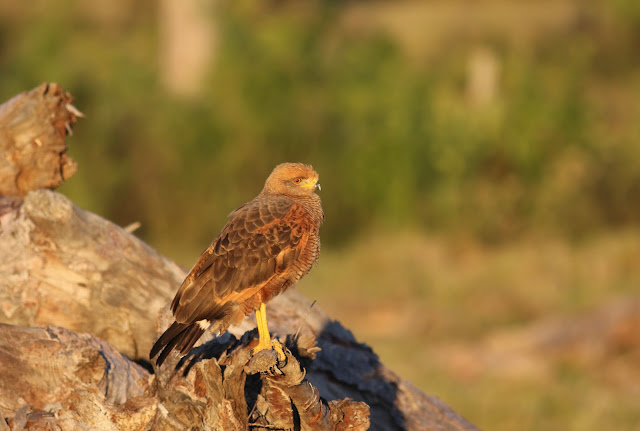
Savannah Hawk

Southern Lapwing

Pampas Deer
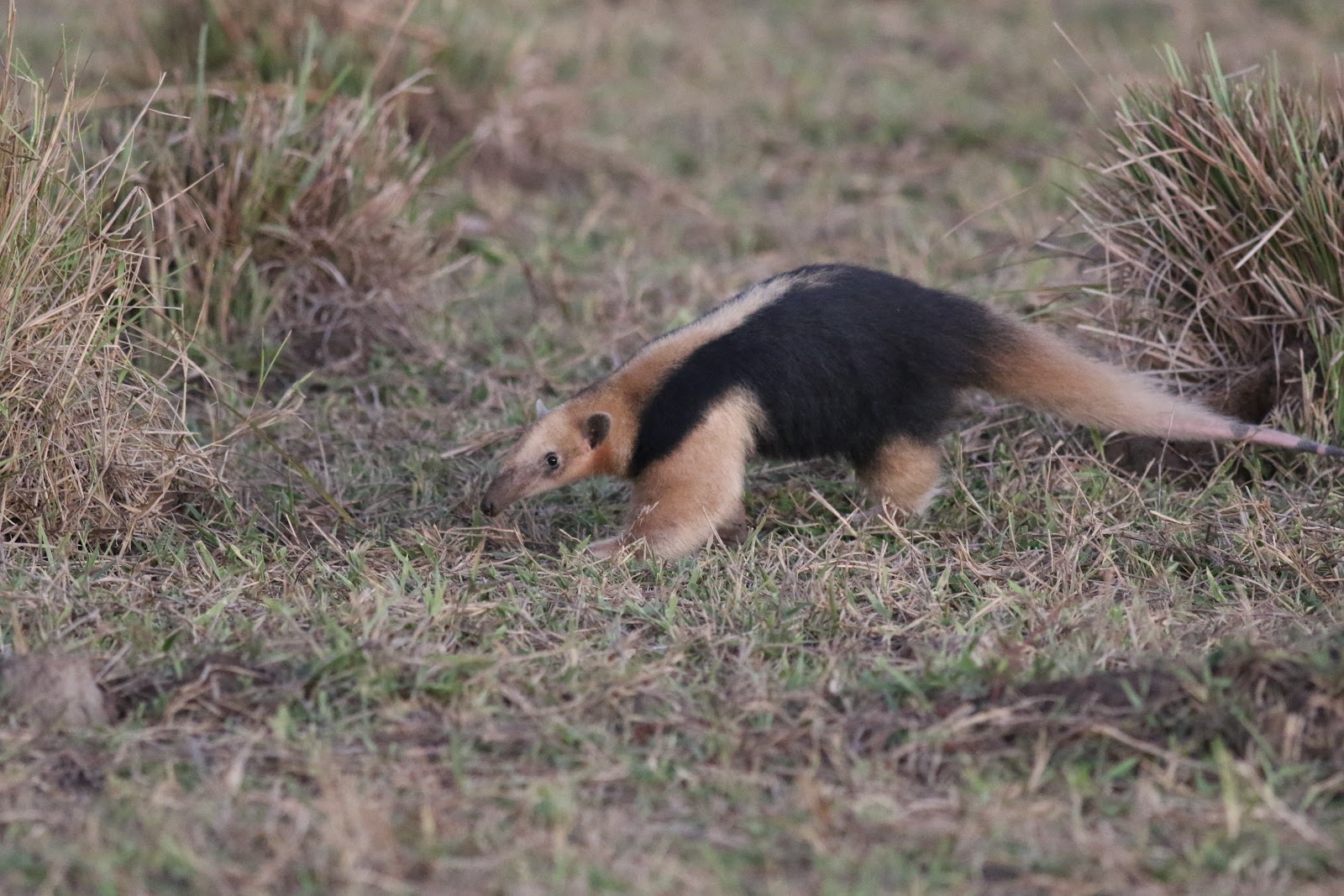
Tamandua! Otherwise known as the Lesser Anteater.

What a day! Day 3 was spent exploring all over the property and was probably even better but I will try and spare you photos of the same species.