Friday, December 6, 2024

More Local Stuff and a Black-Chinned (22-Sep-01Oct2024)

Good migration birding continues into October in Wilmington, many times with the best part of it at the end of September.  However, this year we never really had a good cold front with strong northwest winds so we never really had a stellar fallout.


 Burnt Mill continued to produce confusing empids into late September, but this was was most certainly an Acadian.


Bolete mushrooms in the lawn were a good distraction during my son's cross country meet.  I haven't ID'ed this one yet but it bruised blue quickly in the gills.


I am always hesitant to eat these types of shrooms although I think most Boletes are safe, mainly because the lawns they grow in are heavily treated with chemicals.

On the morning of September 27, I headed to the Johnnie Mercer Pier very early because I figured the strong winds could blow in something interesting.


Sam C and I had some Cory's/Scopoli's coming in relatively close which is good for New Hanover County.  In fact, there are very few Calonectris shearwaters that have been photographed in this area at all and so no one has tried to separate them into species since the split occurred last year.


To me, it looks as if the white extends into the "hands" of the wingtips but it is admittedly hard to gauge because this bird's primary feathers are in molt.  I posted some of these pics on a Facebook pelagic bird group and the first two people that weighed in said it looked good for a Scopoli's Shearwater which would be New Hanover's first record.  However, just today someone else weighed in and challenged that ID.  


Depending on how the Facebook discussion goes, I may have to change the ID back to Calonectris sp..

Later that same day, Melissa and I went up to have dinner with Luke in Chapel Hill and stayed the night.  We took a nice stroll at Brumley North which is probably the best migration birding spot in the triangle.


Hooded Warbler


Scarlet Tanager


It ended up being kind of a slow day but I do love getting out of Wilmington every now and again.

One NC bird that has not been kind to my camera is the Black-chinned Hummingbird.  We have had a handful in NC but usually it is a one-day wonder or a female type bird.  My one photo record is of a female that was banded taken from 25 yards away from a feeder. So I was really happy to see that Gilbert G up in Snead's Ferry had a male coming reliably to his feeder and after some emails he agreed to host me for a morning.


Black-chinned Hummingbird - The light was wrong for a shot from his deck so I had to try and get some shots when it landed in nearby trees.  I wanted to try and get the purple gorget and I managed to get a few shots but never quite nailed it.


Thanks Gilbert!


Wednesday, December 4, 2024

Wilmington Migration Birding (05Sep - 20Sep2024)

After coming back from a trip like the one in Colombia it can be hard to get motivated to go birding locally, but I started to catch the bug again as fall migration was heating up in September.


Summer Tanager - Burnt Mill Creek is my go to spot during fall migration.  The creek winds just outside of downtown Wilmington and has lots of old trees which attract neotropical migrants looking for some juicy bugs and fruits to fatten up for the long flight south.


Yellow-crowned Night Heron - Airlie is also a good spot.


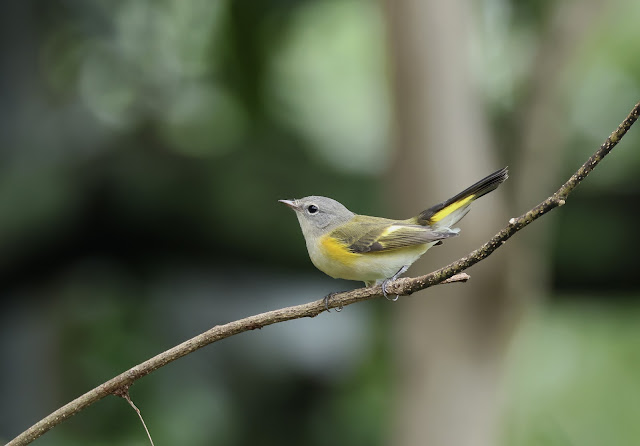
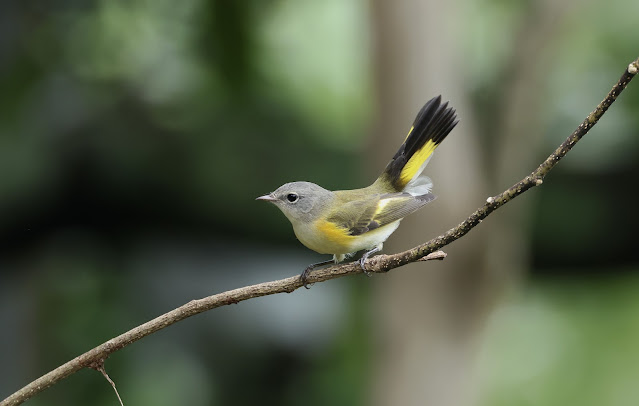
American Redstart


Black-and-White Warbler


Red-eyed Vireos are the most common migrant in September.  They are seemingly everywhere and particularly like the Magnolia berries.


Great Crested Flycatcher


Yellow-crowned Night Heron at Burnt Mill.


Acadian Flycatcher.

Another Yellow-crowned Night Heron on another day.


Baltimore Oriole


Veeries are usually the first thrush to show up at Burnt Mill Creek (BMC).


We have no shortage of Cape May Warblers during migration on the coast.


Worm-eating Warblers are usually more difficult to find during migration.


Common Yellowthroats are a dime a dozen at BMC but not usually adult males.


Northern Parulas are also very common.


Nashville Warblers will sometimes trip the rare flag in eBird but they are becoming easier to find during fall migration at BMC.


Oddly enough Palm Warblers will also trip the rare flag early in September, but they quickly become very common in October.


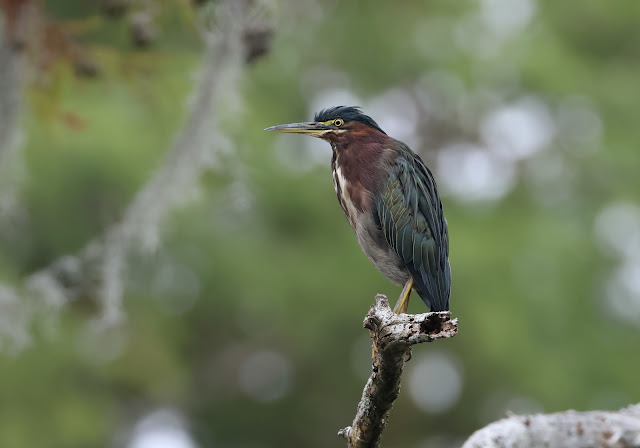
Green Heron ruling the roost.


Prairie Warbler


White-eyed Vireos abound at BMC in the fall.


Another Nashville


Anhingas are enjoying the mullet which are plentiful in the creek which is surprisingly tidal.


Another "Yellowstart".


Another Veery.


Every year we get some interesting Traill's flycatchers around the pond at BMC.  We were not able to get this one to vocalize so it will remain Alder/Willow.


Eastern Wood Pewees are easier to ID based on the long primary extension (wing tips).


Some epmidonax flycatchers are better left unidentified. Maybe an Acadian.


A good candidate for Yellow-bellied Flycatcher but I still left it unidentified.

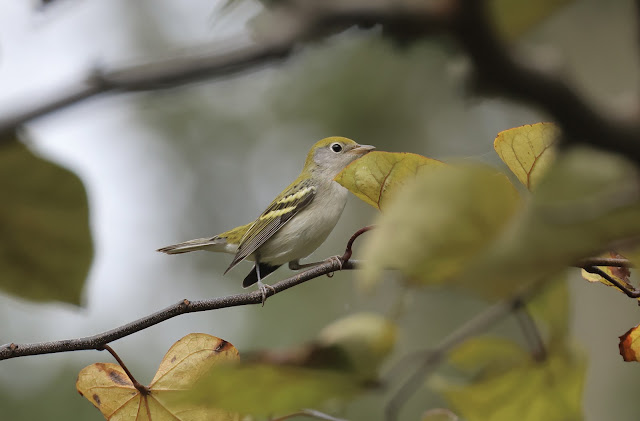
Chestnut-sided Warbler


Magnolia Warbler


Another Acadian


Red-eyed Vireo


Yellow-crowned Night Heron with a fiddler crab.  The main reason they love BMC is that the tidal habitat is home to zillions of fiddlers.


In late September, Jesse A posted that someone had a Hudsonian Godwit at Fort Fisher so I jumped at the chance considering how many times I have missed them in New Hanover County.  Luckily it was still there.


Although fall migration is a little anemic in Wilmington, it still beats the summer doldrums.